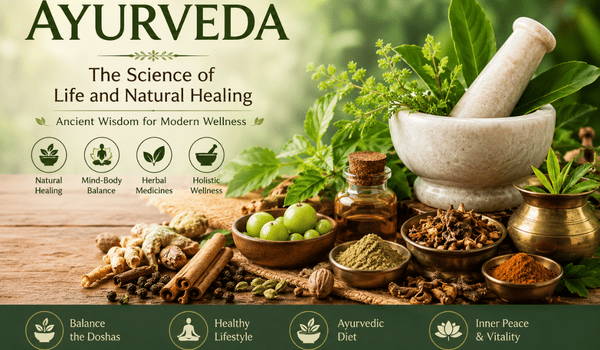
Ayurveda is one of the world’s oldest holistic health systems, originating in India over 5,000 years ago. Today, Ayurveda continues to inspire millions of people who seek a balanced lifestyle through natural practices, mindful nutrition, and traditional wellness principles. This educational guide explains Ayurveda, the fundamentals of Ayurvedic Medicine, its history, philosophy, major principles, herbs, therapies, and modern relevance. The information on this page is intended for educational purposes only and should not replace professional medical advice.
What is Ayurveda?
Ayurveda is a traditional system of wellness that focuses on achieving balance between the body, mind, and lifestyle. The word Ayurveda comes from the Sanskrit words Ayur (life) and Veda (knowledge), meaning “the knowledge of life.”
Unlike approaches that focus only on treating illness, Ayurveda emphasizes prevention, healthy daily habits, balanced nutrition, natural living, and overall well-being. Ayurvedic Medicine encourages individuals to maintain harmony with nature through diet, physical activity, sleep, stress management, and appropriate herbal support.
Today, Ayurveda is recognized globally as a complementary wellness tradition and continues to be studied for its historical knowledge and lifestyle practices.
History of Ayurveda
The history of dates back thousands of years in ancient India. Traditional Ayurvedic knowledge was documented in classical texts such as the Charaka Samhita, Sushruta Samhita, and Ashtanga Hridaya.
For centuries, Ayurvedic Medicine has influenced healthcare traditions throughout South Asia and continues to be practiced in many parts of the world. Modern research is also exploring various Ayurvedic herbs and traditional wellness practices for their potential benefits.
Principles of Ayurveda
The foundation of is based on balance. According to Ayurvedic philosophy, good health depends on maintaining harmony between the body, mind, environment, digestion, and daily habits.
Some core principles include:
- Individualized wellness
- Preventive healthcare
- Healthy digestion
- Balanced nutrition
- Natural lifestyle practices
- Seasonal adaptation
- Mental well-being
- Quality sleep
- Physical activity
- Mind-body connection
These principles make Ayurveda a comprehensive lifestyle system rather than only a form of treatment.
The Three Doshas in Ayurveda
One of the most recognized concepts in is the three Doshas.
Vata
Vata is associated with movement, communication, circulation, and the nervous system.
Pitta
Pitta is associated with digestion, metabolism, body temperature, and transformation.
Kapha
Kapha is associated with stability, strength, lubrication, and body structure.
According to Ayurvedic Medicine, every individual has a unique combination of these Doshas, and maintaining their balance is considered important for overall wellness.
Ayurvedic Medicine
Ayurvedic Medicine combines traditional knowledge with personalized wellness practices. It may include:
- Herbal preparations
- Balanced nutrition
- Lifestyle guidance
- Yoga
- Meditation
- Breathing exercises
- Massage therapies
- Detoxification practices
- Seasonal routines
The primary goal of Ayurvedic Medicine is to support healthy living through long-term balance rather than providing quick solutions.
Popular Ayurvedic Herbs
Many herbs are widely discussed in Ayurveda for their traditional uses.
Ashwagandha
Traditionally used to support overall wellness and stress management.
Turmeric
Known for its long history in traditional cooking and wellness practices.
Tulsi
Often referred to as Holy Basil and commonly used in herbal preparations.
Neem
Traditionally valued for personal care and wellness applications.
Amla
A nutrient-rich fruit commonly included in traditional Ayurvedic nutrition.
Giloy
Frequently mentioned in traditional wellness literature.
Triphala
A traditional herbal combination widely used in Ayurveda.
Brahmi
Associated with traditional cognitive wellness practices.
Shatavari
Traditionally included in women’s wellness formulations.
Moringa
A nutrient-rich plant that has gained worldwide popularity.
Ayurvedic Diet
Diet plays a central role in Ayurveda.
An Ayurvedic diet generally focuses on:
- Fresh foods
- Seasonal ingredients
- Whole grains
- Fruits
- Vegetables
- Healthy fats
- Legumes
- Herbs
- Spices
- Proper hydration
Balanced eating habits are considered essential for maintaining overall wellness.
Ayurvedic Lifestyle
Ayurveda encourages healthy daily routines that support long-term well-being.
Examples include:
- Waking early
- Maintaining regular meal times
- Daily physical activity
- Yoga practice
- Meditation
- Good sleep habits
- Stress management
- Spending time in nature
- Mindful eating
- Positive mental health practices
Panchakarma Ayurveda
Panchakarma is one of the well-known concepts within . It refers to a traditional set of cleansing and rejuvenation practices that are performed under professional supervision in specialized settings.
Benefits of Ayurveda
Many people choose Ayurveda because it emphasizes:
- Preventive wellness
- Healthy lifestyle habits
- Balanced nutrition
- Mind-body wellness
- Natural living
- Personalized guidance
- Long-term healthy routines
- Holistic well-being
These principles continue to make relevant for people interested in overall health and wellness.
Ayurveda in Modern Life
Today, has become increasingly popular around the world. Many individuals combine Ayurvedic lifestyle practices with modern healthcare under professional guidance.
Interest in Ayurvedic Medicine has grown in areas such as:
- Wellness education
- Nutrition
- Herbal products
- Yoga
- Mindfulness
- Healthy lifestyle
- Preventive wellness
Modern scientific research continues to explore traditional Ayurvedic knowledge, although evidence varies depending on the specific practice or herb.
Although Ayurveda includes many traditional practices, herbal products and supplements are not suitable for everyone. Individuals who are pregnant, breastfeeding, have medical conditions, or take prescription medications should consult a qualified healthcare professional before using Ayurvedic products.
This guide is educational and should not be considered medical advice.
Conclusion Ayurveda
Ayurveda is a comprehensive system of traditional wellness that emphasizes balance, healthy living, natural nutrition, mindful routines, and personalized lifestyle practices. Through Ayurvedic Medicine, herbal knowledge, healthy diets, and daily habits, Ayurveda continues to inspire people worldwide who wish to improve their overall well-being. Learning about can help individuals understand one of the world’s oldest wellness traditions while making informed decisions about healthy living alongside professional healthcare guidance.
https://naturicea.com/blogs
https://en.wikipedia.org/wiki/Charaka_Samhita