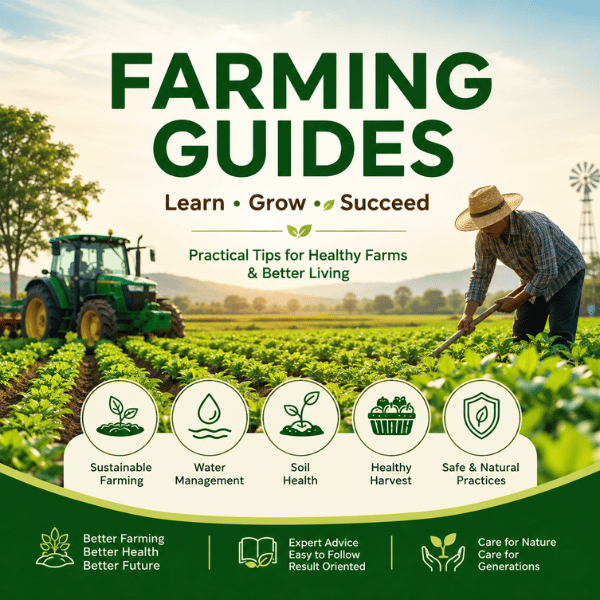
Farming Guides
Farming Guides help farmers, gardeners, agriculture enthusiasts, and beginners learn practical techniques for growing healthy crops while protecting the environment. Welcome to our Farming Guides page, where you can explore educational resources covering sustainable agriculture, Health, crop cultivation, organic farming, soil management, irrigation, and modern agricultural practices. Our goal is to provide reliable, easy-to-understand, and practical information that supports productive farming while promoting healthier communities through responsible food production.
Agriculture plays an essential role in everyday life because it provides the food, fiber, and natural resources that people depend on. Moreover, modern farming combines traditional knowledge with scientific innovation to improve productivity while preserving natural ecosystems. Healthy farming practices not only increase crop yields but also contribute to better nutrition, environmental sustainability, and overall Health. Therefore, every guide on this page is carefully written to help readers make informed decisions using practical agricultural knowledge.
Getting Started with Modern Agriculture
Starting a successful agricultural journey begins with careful planning and a clear understanding of local farming conditions. Choosing suitable crops, preparing fertile soil, selecting quality seeds, and following the correct planting season are some of the most important steps for achieving consistent results. Furthermore, understanding weather patterns, irrigation methods, and soil characteristics allows growers to improve productivity while reducing unnecessary risks.
Our guides explain essential topics including crop planning, seed selection, soil preparation, water conservation, fertilizer management, pest prevention, harvesting methods, and responsible farm management. Every article is written in simple language so readers of all experience levels can apply practical knowledge with confidence.
Organic Cultivation for Sustainable Growth
Organic cultivation encourages environmentally responsible farming methods that improve soil fertility while reducing dependence on synthetic chemicals. Compost, natural fertilizers, biological pest management, crop rotation, and healthy soil practices all contribute to long-term agricultural sustainability. Furthermore, these methods support biodiversity and help maintain cleaner ecosystems for future generations.
Consumers are increasingly interested in naturally produced food because it supports healthier lifestyles and responsible environmental practices. As a result, learning sustainable cultivation methods benefits both agricultural producers and the communities they serve.
Healthy Food Begins with Better Agriculture
The relationship between agriculture and Health is stronger than many people realize. Healthy soil supports nutritious crops, while nutritious crops contribute to healthier families and communities. Therefore, improving agricultural practices helps increase food quality, supports balanced nutrition, and promotes long-term well-being.
Fresh vegetables, fruits, grains, herbs, and other naturally grown foods provide important nutrients that support physical and mental wellness. Similarly, responsible farming methods reduce environmental impact and encourage safer food production systems. By understanding sustainable agriculture, readers can appreciate how food production influences Health, environmental protection, and everyday quality of life.
Soil, Water and Crop Management Farming
Healthy soil and efficient water management are the foundation of productive agriculture. Fertile soil provides essential nutrients that support strong root development, healthy plant growth, and higher crop yields. Moreover, regular soil testing, compost application, crop rotation, and mulching help maintain long-term soil fertility while reducing nutrient loss.
Water conservation is equally important for sustainable agriculture. Drip irrigation, rainwater harvesting, and proper irrigation scheduling allow farmers to use water more efficiently while protecting valuable natural resources. Furthermore, responsible water management improves crop quality, reduces production costs, and strengthens farming systems against changing weather conditions.
Smart Agricultural Techniques Farming
Modern agriculture continues to evolve through technology and innovation. Precision farming, improved seed varieties, weather forecasting, farm machinery, and digital monitoring systems help farmers make informed decisions and increase productivity. In addition, sustainable technologies reduce waste, improve resource efficiency, and support environmentally responsible food production.
Combining traditional agricultural knowledge with modern farming techniques creates stronger and more resilient farming systems. As a result, growers can improve efficiency while protecting soil, water, and biodiversity for future generations.
Harvesting, Storage and Farm Safety Farming
Harvesting crops at the correct stage is essential for maintaining quality and maximizing value. Proper storage methods protect grains, vegetables, fruits, and other agricultural products from moisture, pests, and spoilage. Furthermore, careful handling after harvest helps preserve freshness and reduces unnecessary food loss.
Farm safety is another important aspect of successful agriculture. Using protective equipment, maintaining machinery, storing tools safely, and following safe working practices reduce the risk of accidents. Therefore, every farming operation should prioritize both productivity and personal safety.
Learn, Grow and Build a Sustainable Future Farming
Our Farming Guides are designed to help readers develop practical agricultural knowledge while encouraging responsible farming practices. Whether you are starting your first garden, managing a family farm, or exploring sustainable agriculture, these guides provide reliable information that supports continuous learning and long-term success.
We regularly publish educational resources covering crop cultivation, organic agriculture, soil improvement, irrigation, harvesting, food quality, and Health. Every guide is created with a focus on accuracy, clarity, and practical value so readers can confidently apply what they learn in real-world situations.
Continue Exploring
Explore more resources on organic agriculture, healthy food production, sustainable living, and Health through our related guides. You may also find these educational references useful for learning more about agriculture and wellness:
- Wikipedia – Agriculture: https://en.wikipedia.org/wiki/Agriculture
- Wikipedia – Organic farming: https://en.wikipedia.org/wiki/Organic_farming
By learning sustainable agricultural practices and making informed decisions, individuals can contribute to healthier food systems, stronger rural communities, and a more sustainable future for everyone.